
Discover the UK’s untapped renewable energy resource
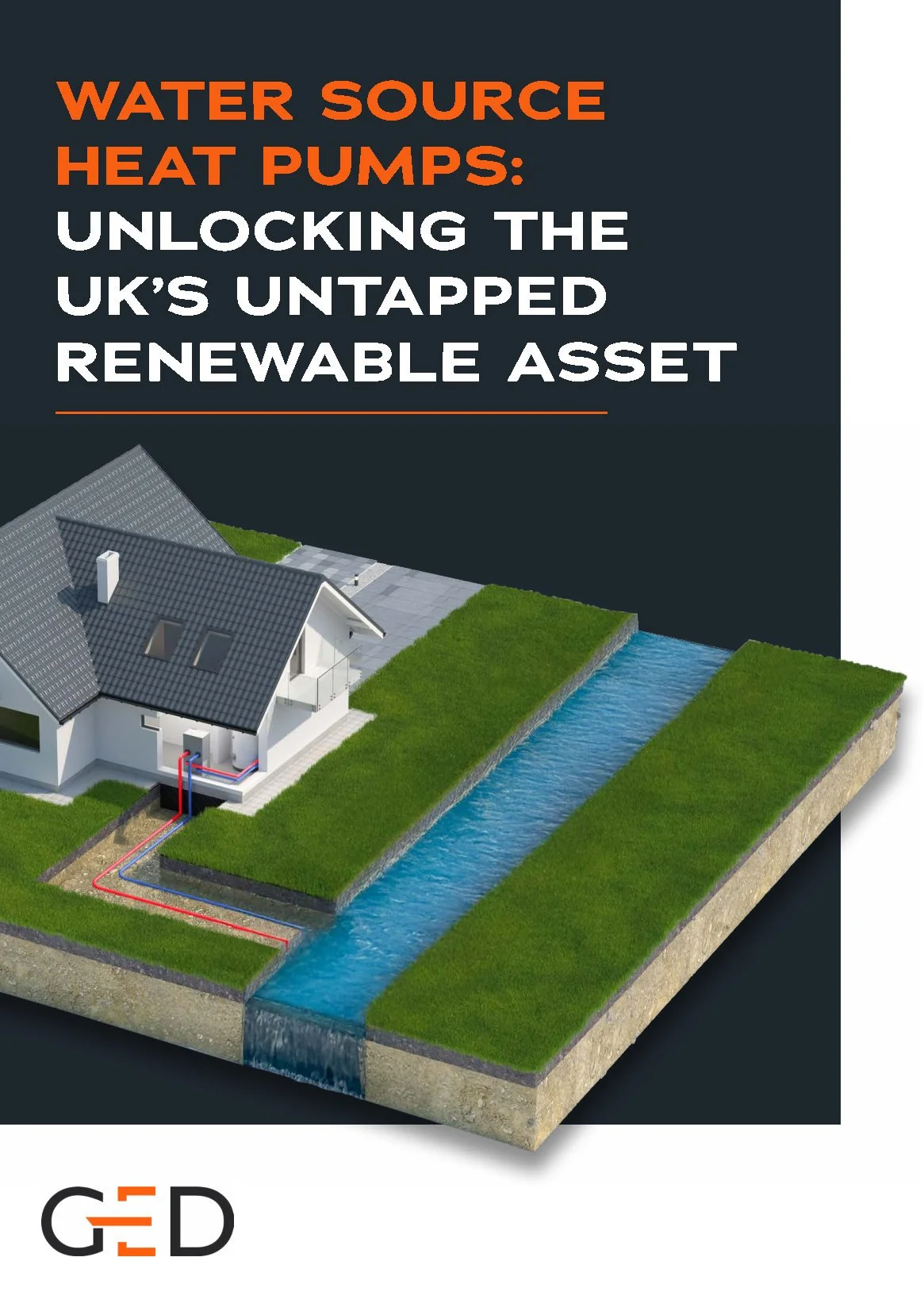
This free e-book explores the principles, benefits and potential applications of water source heat pump technology, as well as the considerations that influence whether a water-based system is suitable for a project.
Water source heat pumps remain less widely deployed than ground and air source systems, despite the UK having an extensive network of waterways and aquifers capable of supporting low-carbon heating and cooling.
Inside the e-book, you'll discover:
What water source heat pumps are and how they operate.
How rivers, lakes, canals and aquifers can be used as renewable heat sources.
The differences between open-loop and closed-loop systems.
The benefits of efficient, low-carbon heating and cooling.
The technical, environmental and regulatory factors that must be considered.
How water source heat pumps can support large buildings, developments and heat networks.
Why early feasibility and specialist design are essential to successful delivery.
Across the UK, significant renewable energy potential lies within rivers, canals, lakes and underground aquifers.
A major milestone came with the Kingston Heights development, which used an open-loop system to extract heat from the River Thames for residential and hotel buildings. The project helped demonstrate that river-based heat pumps could operate successfully within a complex urban environment.
In 2014, the Department of Energy & Climate Change published a national map highlighting waterways capable of supporting water source heat pump deployment. More than a decade later, the resource remains available, while the need to decarbonise heating has become increasingly urgent.
With the right site conditions, assessments and system design, water source heat pumps can offer a reliable and highly efficient route to low-carbon heating and cooling.
Download your free Guide
Fill in your details below to get instant access to the full guide.
Your information will be handled securely. Please review our Privacy Policy to learn how we collect, use and protect your information.